Use SvelteFlow to Create AI Workflow Visualized Node-Edge Graph GUI Editor
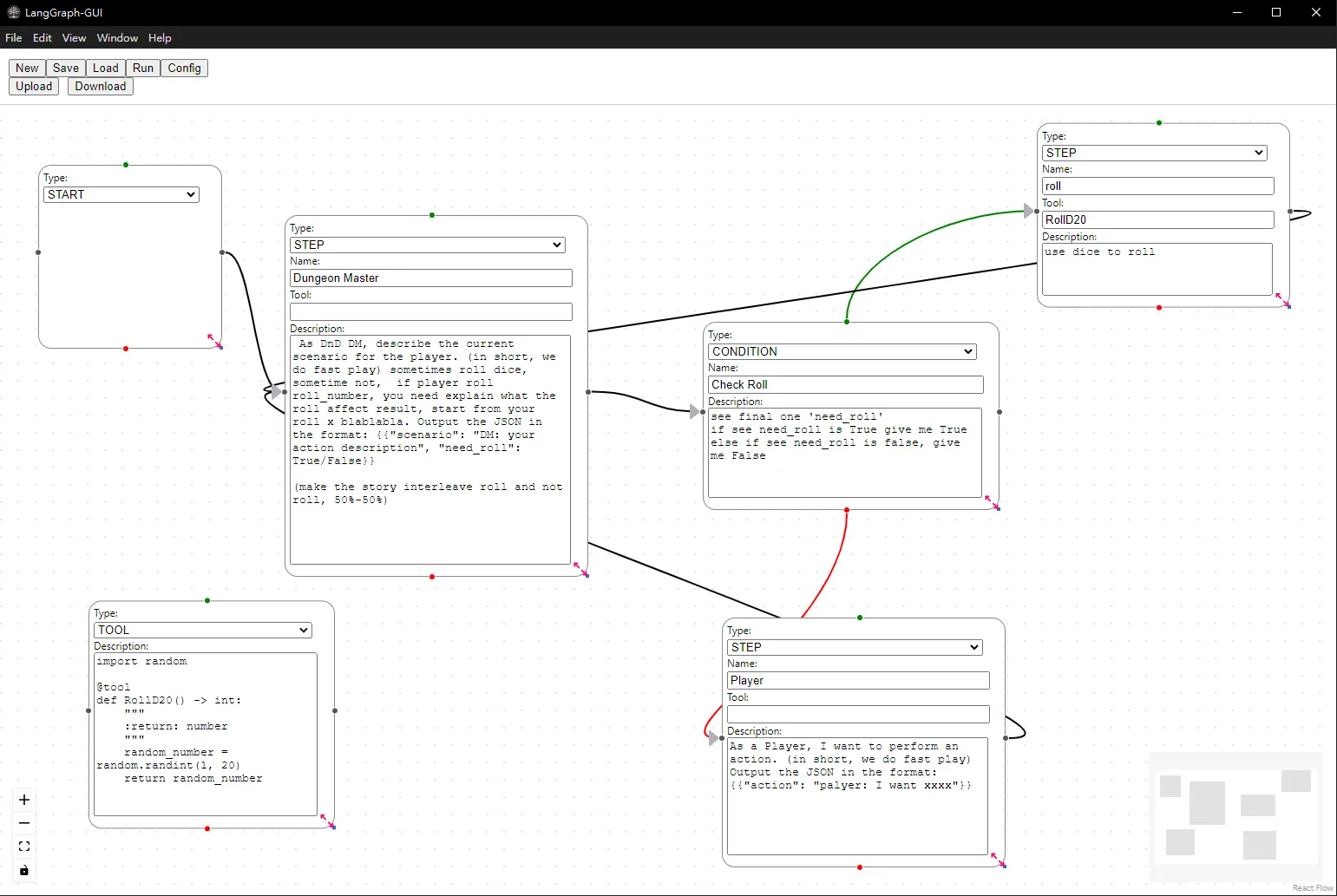
What I want
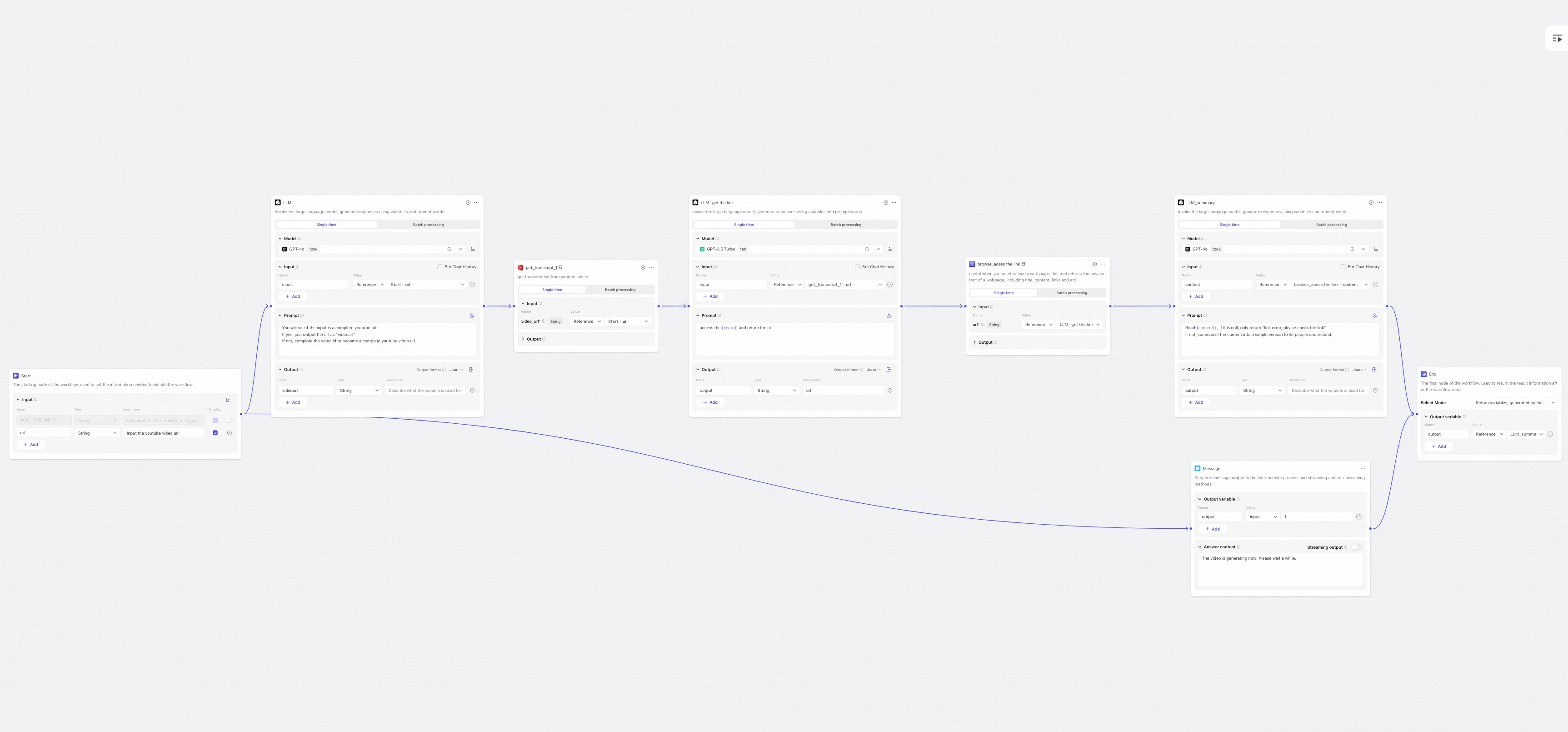
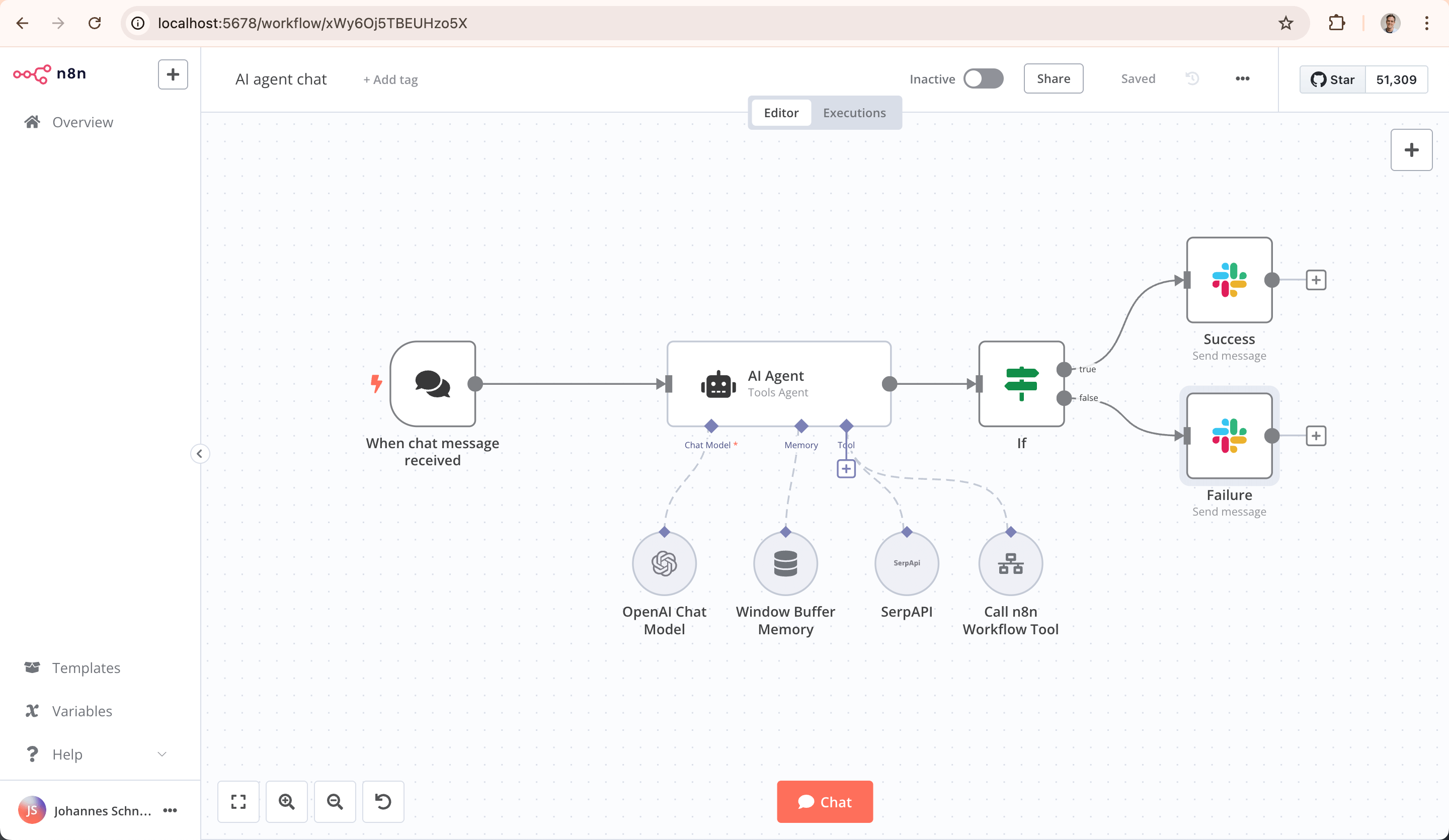
like dify, Coze, n8n…..
and self-host, more flexibity, use langgraph
- dify
- coze
- n8n

The Core Problem: Why Build Another One?
Although existing platforms are powerful, they commonly suffer from several pain points:
- Vendor Lock-in: Core logic is deeply integrated with specific cloud services, making migration difficult.
- Limited Extensibility: Hard to easily integrate custom tools or models.
- Opaque Logic: Lack of full visibility into the internal workings of the agent, making debugging challenging.
- Cost: Large-scale usage in production environments can become prohibitively expensive.
Why Is Visual Programming Needed?
- Lower the Technical Barrier
- Improve Development Efficiency
- Facilitate Team Collaboration
- Reduce Configuration Errors
Time Flies……
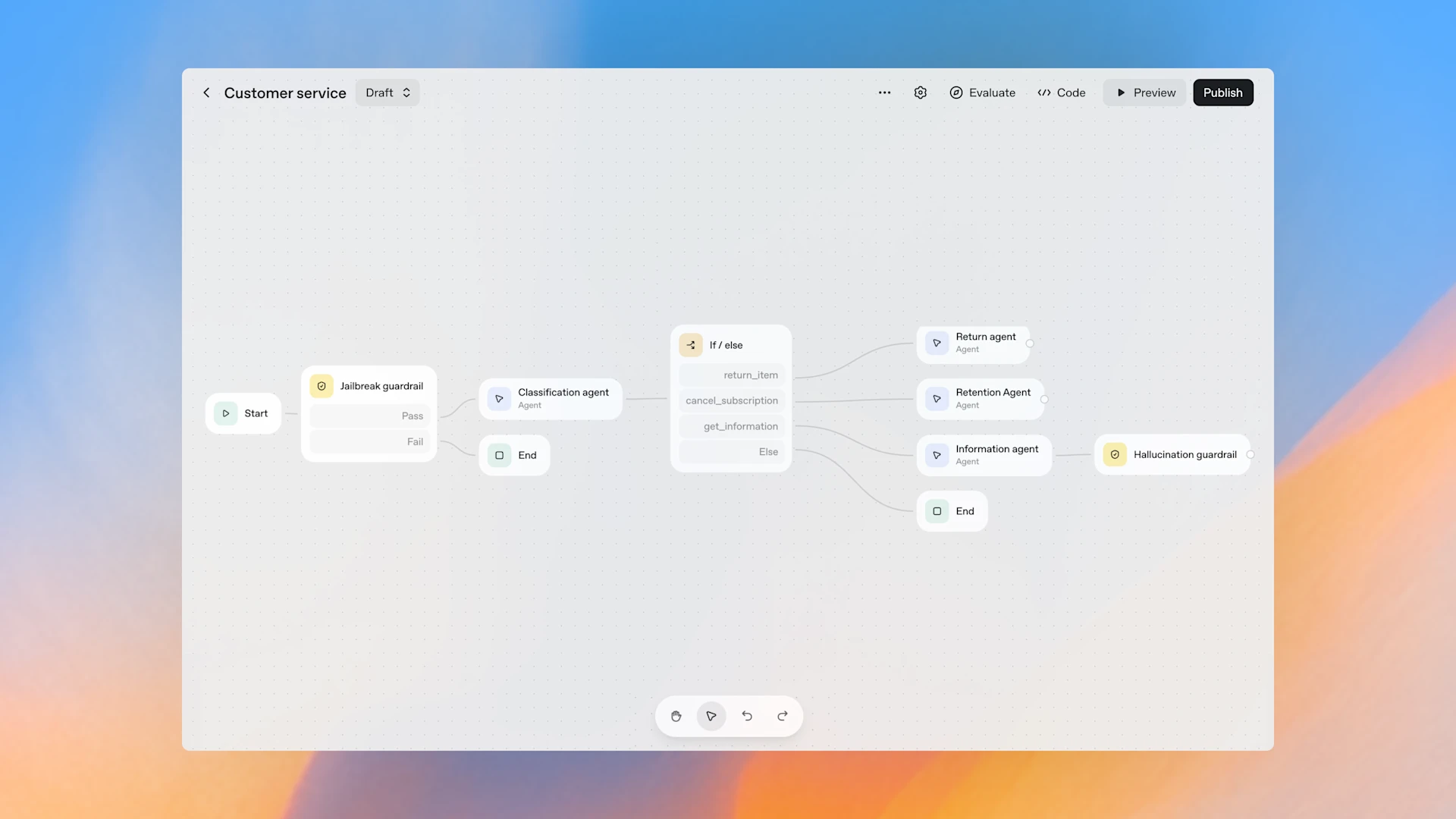
OpenAI AgentKit
Similar LLM libs
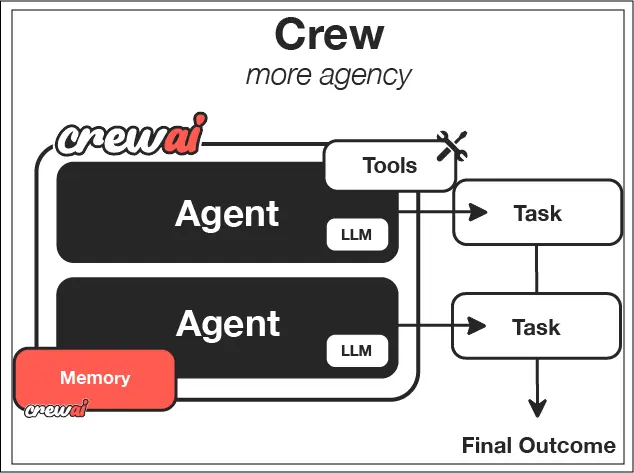

| Feature | CrewAI | LangChain | LangGraph |
|---|---|---|---|
| Graph Support | ❌ Limited | ⚠️ Linear chains | ✅ Full graphs |
| Loops | ❌ No | ❌ No | ✅ Yes |
| Conditions | ❌ No | ⚠️ Limited | ✅ Yes |
| Multi-agent | ✅ Yes | ⚠️ Basic | ✅ Yes |
| GUI Support | ❌ No | ❌ No | ❌ No |
all of these not have official GUI, we need create by ourself.
core design
use Nodes as SSOT to represent Edges
Evolution: From PyQt to Web-Based Solution
CrewAI-GUI-pyQt

Limitations:
- Desktop-only deployment
- Limited web integration
- Harder to collaborate
- Less familiar developer ecosystem
Technology Stack
- Frontend:
- Svelte

- react
 (early version)
- Svelte
- Backend:
- FastAPI

- flask (early version)
- FastAPI
- Infrastructure
- Kubernetes

- Docker Compose

- Kubernetes
backend API
If your backend have JWT, you can switch by username
post /clean-cache/{username}
get /download/{username}
post /upload/{username}
post /run/{username}
Run Graph Button
post /upload/{username}
post /run/{username}
LangGraph.js
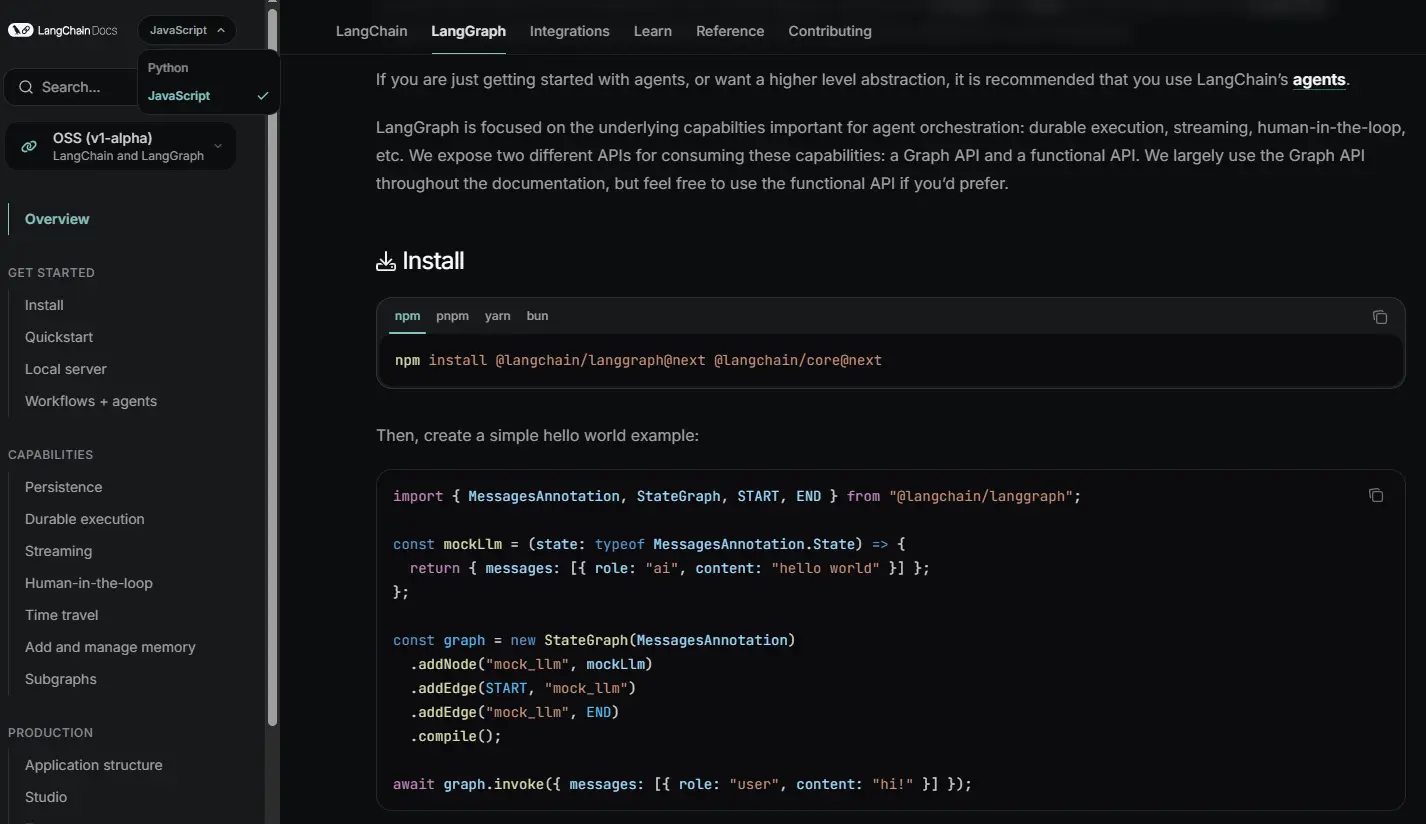
Graph Data Strcture Design
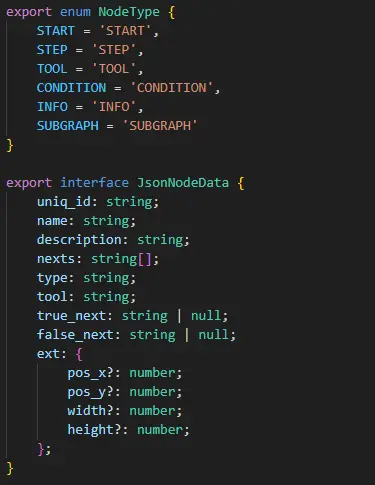
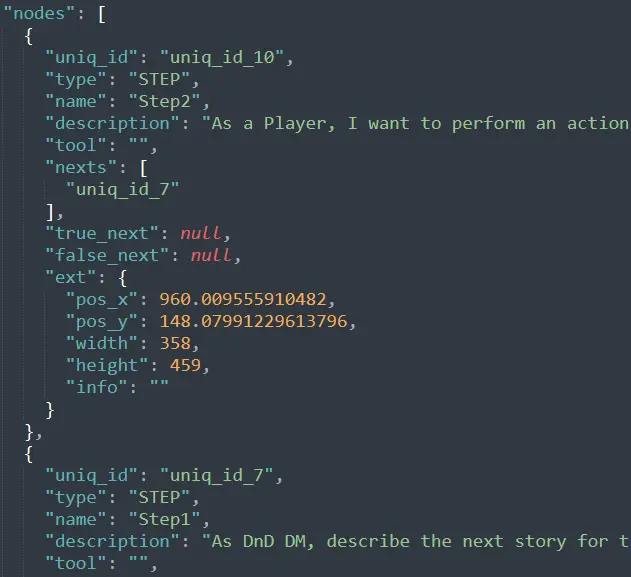
Why xyflow
xyflow is mature js graph library (svelteflow, reactflow)

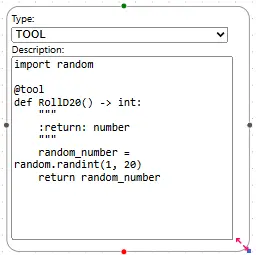
Custom Nodes
no code
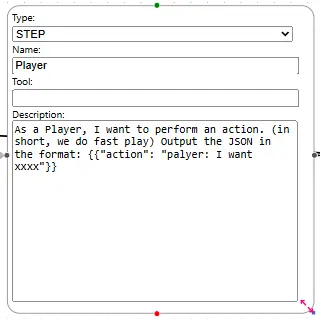
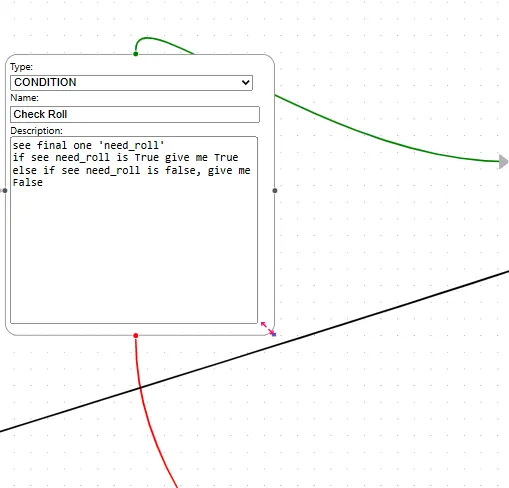
Custom Nodes
low code
Why ReactFlow

- React have large ecosystem and community
- Graph GUI with node edge design
- flexibity enough for make it as editor
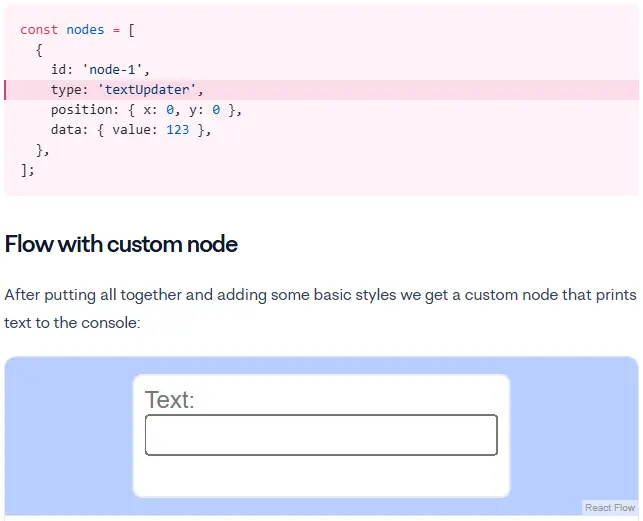
Benefit from ReactFlow
custom edge, custom nodes
The Jourery of ReactFlow
LangGraph-GUI 1.0 using reactflow
- Hard to make SSOT
- ReactFlow not support signal-like logic
- hard to sync Redux and React Context
- data update flow cannot align SSOT design
- not only nodes, but also edges need update seperatly
- Code lines more longer

learn lessons from ReactFlow
Fixing typing content in node too early
- React’s
onChangefires too early → saves unfinished text. - only save after click other place:
onBlur
Fixing Japanese Input in React (IME Support)
- Japanese/Chinese/Korean use IME (Input Method Editor).
- Example: typing “日本” → React may save
"niho"before confirmation. - need
const changeBuffer = useRef({})
JS → TS
- As projects grow, plain JavaScript becomes harder to manage. TypeScript helps us scale.
- unclear data structures, harder to refactor
bothered by TS
"scripts": {
  "lint": "prettier --write . && prettier --check . && npx eslint . --ext .svelte,.svelte.ts,.svelte.js --fix",
},
any will through warning, this is annoying
// lib/json.ts

export type Json =
  | string
  | number
  | boolean
  | null
  | Json[]
  | { [key: string]: Json };
Why SvelteFlow
- Svelte 5 using signals
- code numbers usually fewer than react
- easy to pass computed runes
- SvelteFlow 1.0 highly affinity svelt 5 rune, signals
- fewer and more beautiful lines
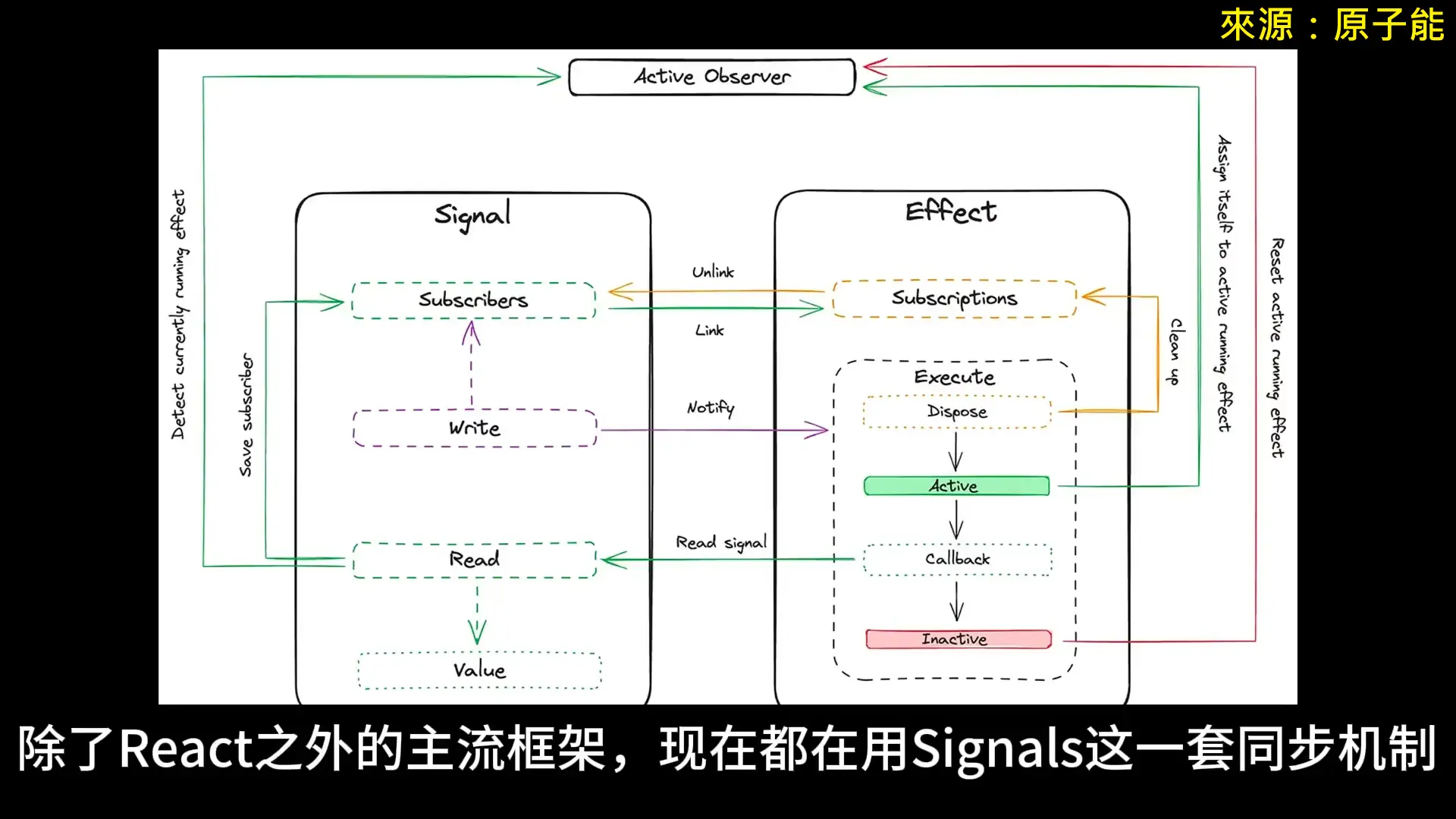
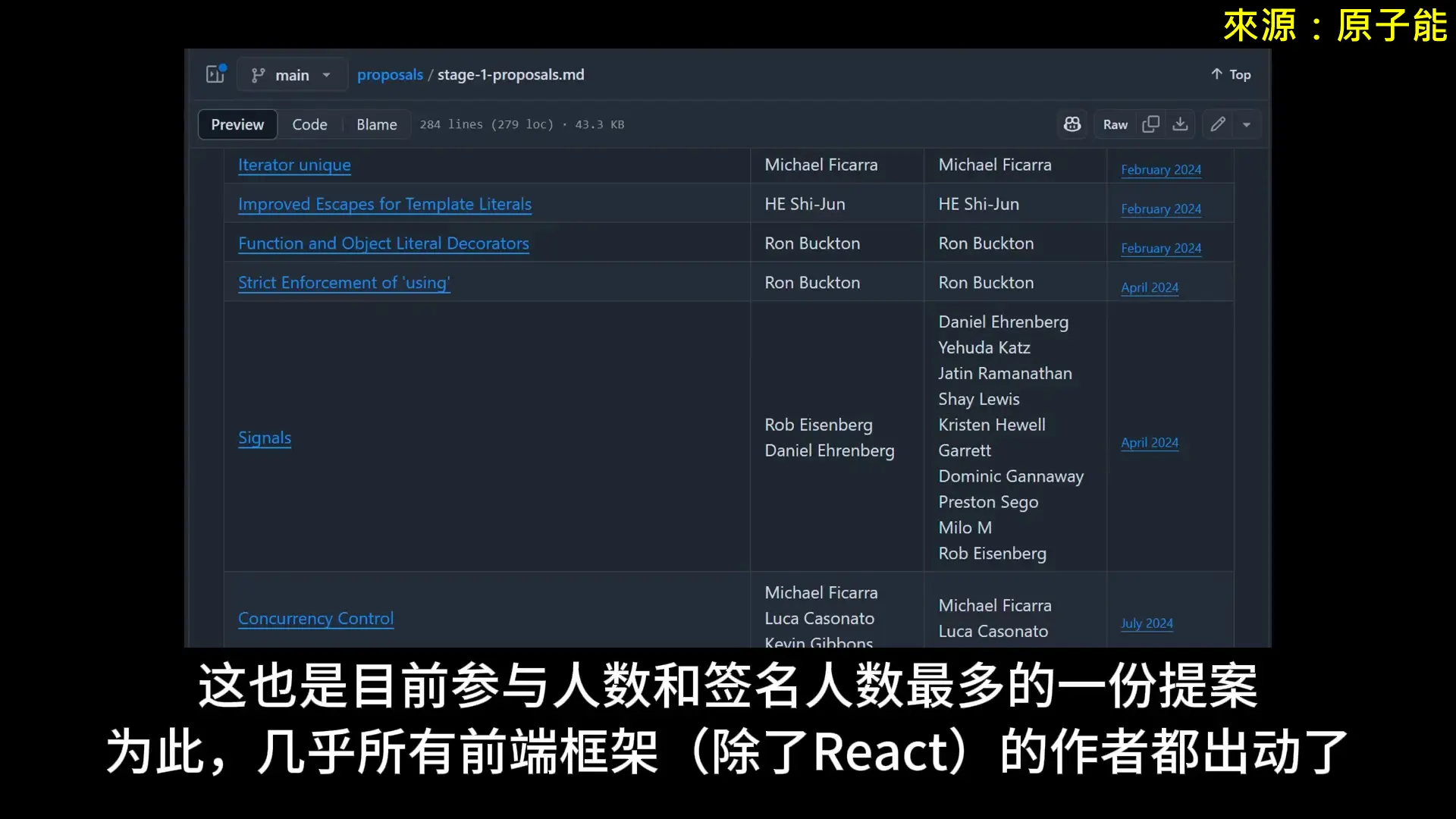
Signals
Signals
- Reactive Value
- A signal is essentially a wrapped value. Anywhere it is read, dependencies are automatically subscribed.
- Updating a signal → automatically notifies its dependents → triggers UI updates or recomputations.
- Computed Signals (Derived Values)
- A computed signal is a value derived from other signals.
- Effect / Reaction (Side Effects)
- When signals change, they can trigger effects such as updating the DOM or calling an API.
| Framework / Library | signal | computed | effect |
|---|---|---|---|
| Solid.js | createSignal |
createMemo |
createEffect |
| Angular (v16+) | signal() |
computed() |
effect() |
| Preact Signals | signal() |
computed() |
effect() |
| Vue 3 |
ref / reactive
|
computed |
watchEffect |
| Svelte 5 |
$state / writable store |
$derived / derived store |
$effect / $: declaration |
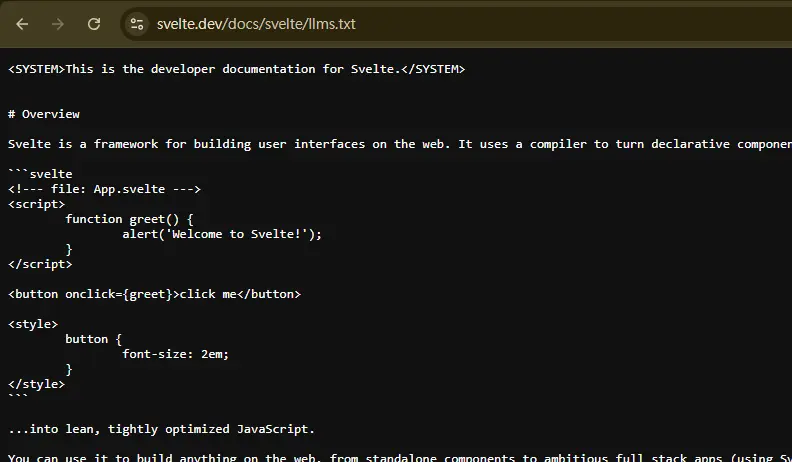
llms.txt
- With
llms.txt, LLMs know:- where to look (core guides, API, examples)
- what to skip (noise, menus, ads)
- like
robots.txtbut for AI
- For Svelte devs:
- Signals make UI state simple
- llms.txt makes docs simple for AI
SvelteFlow 1.0 release
xyflow/svelte 1.0.0 released at 2025 May 14
fully support rune
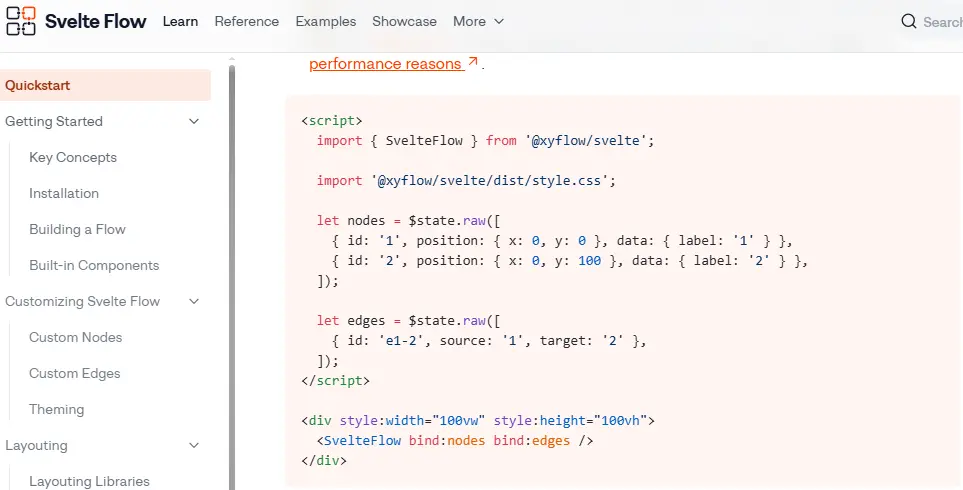
Svelte is Elegant
signal chain: Node(SSOT) –> Edge –> SvelteFlow

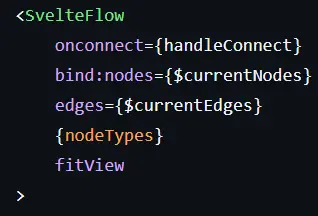
bind:nodes={$currentNodes}
edges={$currentEdges}
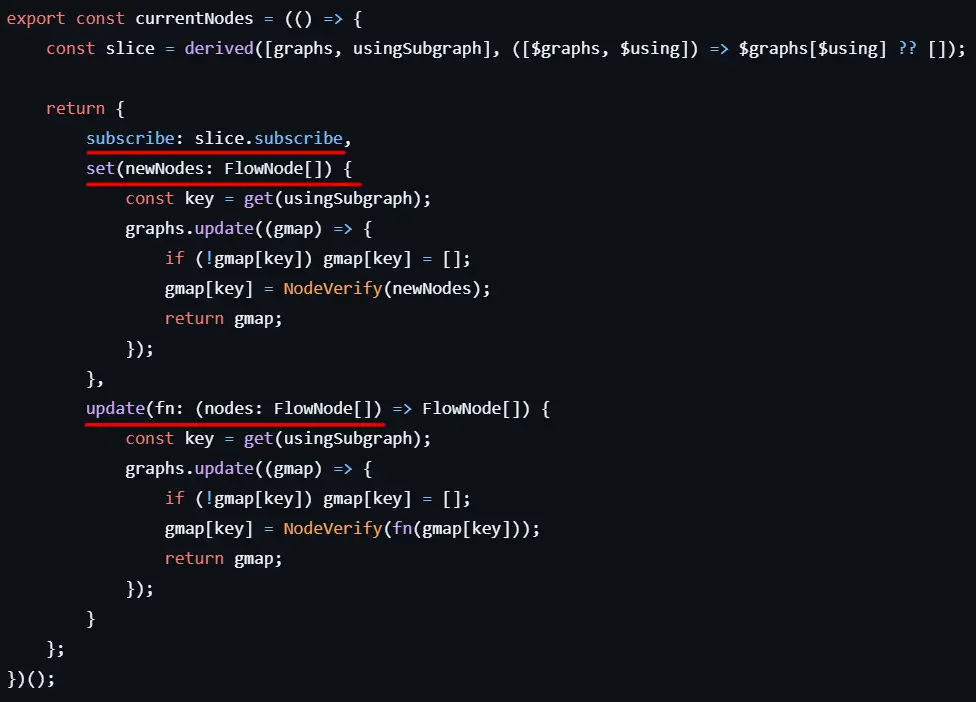
Svelte is Elegant (cont.)
define your own signal object:
Simple Demo

Extend Demo

Extend Demo
END
Thank You
- Reference
- reactflow, svelteflow official websites
- https://docs.crewai.com/en/introduction
- https://www.js-craft.io/blog/langchain-vs-langgraph/
- https://framerusercontent.com/images/7IPPObp2xkFVLH1IyW9QvFQ0a2I.gif
- https://pbs.twimg.com/media/GP5rEiZaEAAUqWu?format=jpg&name=4096x4096
- https://raw.githubusercontent.com/n8n-io/n8n/master/assets/n8n-screenshot-readme.png